Author: audreyadmin

  • To Bind Together

    “You aren’t religious are you?” a co-worker asked me after she opened The Glorious Mysteries and saw the title of the first story in my collection, “The Baby Jesus.”

    “What do you mean by religious?” I asked her. “If you mean a strict follower of a particular religious doctrine, no,” I said. “But if you mean, like the Latin root of the word, religio, to bind together, then yes, I very much have religious sensibilities. I look at the world as a place of connections.” What I didn’t tell her is that many of my stories critique or subvert the Catholic tradition itself, and I am not alone in this.

    Last weekend I was at a brilliant performance at the Citadel Theatre (in Edmonton) of Eugene O’Neill’s Long Day’s Journey into Night. ONeill’s characters are deeply influenced by Catholicism, often tragically so. Yet the divided family he presents in Long Day’s Journey could be any family dogged by addiction, failing, and disappointment and that is what makes his particular rendering of it, universal, Catholic and all.

  • Fact or Fiction and the Truth of It

    I had the privilege of travelling the province last month reading from The Glorious Mysteries. At Word on the Street, in Lethbridge, I had just finished reading “The Water Witcher,” one of the Alberta stories in my collection. There was an attentive crowd gathered, probably 30 to 35 people. It was an outdoor festival; we were under a tent. The skies were clear and warm, the winds were calm for Lethbridge. A hand shot up. A middle-aged man, dressed in the clean, white work shirt and pants of a painter or other tradesman, had the first question. I had watched during my twenty-minute reading as he paused at the back of the tent, leaned in to listen, and finally took a seat with the rest of the audience. “One thing I want to know, in that story of yours, did they really end up finding water in that place?”

    Often it’s the sign of a good story when a reader is “taken in.” The man was sincere and earnest. I almost didn’t have the heart to answer. “This is a work of fiction, but it could have happened and it does happen.” The man slumped a little lower in his seat, clearly disappointed. The context is southern Alberta, the summer of the Great Flood of 2013.

    That got me to thinking about fact and fiction and why our age demands so much of reality. Metaphors seem to pale beside the reality of devastation. There are fundamental parts of our world that are out of balance. And yet I would argue that stories illuminate and hold out more hope for the future than all the facts in the world. Just saying… but then I am a writer.

  • London in the Kinnaird Ravine

    London in the Kinnaird Ravine

    Sometimes a day’s weather reminds me of another time and place. This morning in the Kinnaird Ravine it felt to me like London, England in fall. The mingling of warmth and rain, the fragrance of rotting and growing things. The way the light is muted by the clouds and stands of old, old trees. The path through the ravine is still wild. You may not think there is any wilderness left in London, but Hampstead Heath would argue back. And just twenty minutes from the centre of London is Greenwich where I visited one fine November day in 2009. If I were to give this photo a caption it would be the title of an old hymn: “How can I keep from singing?” That’s how I felt this morning in Kinnaird Ravine too.

  • Word Witcher

    I have an artist friend who hasn’t been able to finish her website because of all the little decisions that have to be made: colours, text, logo, fonts, message… I understand. Take the business cards I’m trying to finalize for marketing my next book. A few words, a couple of colours, three weeks later and the mock-up still isn’t at the printers because of one niggling question. What do I want to call myself? A writer or an author?

    There’s a huge debate in the writing world about what each of these words means and whether an author is really a writer or just a published personality. Or whether a writer really cares about being published and marketing their work. I confess, I don’t know a writer who doesn’t want a readership. Being published by other people is often a good check that the writing has integrity. Yet there’s no hard and fast on this as anyone in the publishing business will tell you.

    That debate aside, neither author nor writer really expresses all of who I am. I have had many lives. I brainstormed over email one night with another writer friend: so what if I called myself a word witcher? She loved it. Yes, it expresses so many layers of who you are, your rural roots, it makes one think of water witching, spirituality and women’s work.

    I like the idea of word witching, maybe because one of my stories in this collection is about a water witcher (so this is really some clever marketing ploy), but also, like witchers of water, one has to listen to language’s internal rhythms, spirits and intuitions to find the thread of the story or the vein of a poem. It’s often an irrational process, even dream-like and when one finds the mother lode, it is like a minor miracle.

    So what did I decide? Writer or author or word witcher? No one role can describe all of who I am. I think that’s true for most of us. My name is probably the best descriptor there is and so I’ve decided that that’s enough.

  • Lughnasa, August 1, 2013

    Lughnasa, August 1, 2013

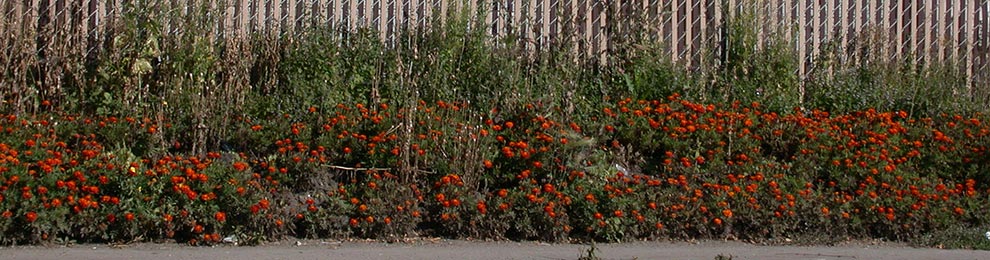
    When I tell people that I live in Boyle Street, they often look a little surprised, even concerned. Yes, some pockets are rough, but some pockets are gold. Maybe it’s because many people here have next to nothing that they make the most of the little they have, why some boulevards, tiny porches and postage-stamp front yards are jam-packed with blooms this time of year. Why people grow marigolds and red poppies right up against 107A Avenue, merry-making of the traffic and the concrete that flows past everyday.

    We are entering the season of harvests. Irish Folklorist, Máire MacNeil, in her tome, The Festival of Lughnasa, relates an old man’s account of a harvest fair held in Lehinch (pronounced la hinge) on the first Sunday in August. He recounts that the fair was full of “tricksters”: musicians, dancers, flame eaters, card sharks, gypsies, young men going from public house to public house, young women in ritual at the well of Liscannor, horse racing along “the strand” and noise everywhere.

    Think of Boyle Street like one continuous harvest festival. Indeed the whole city at this time of year. Full of tricksters and buskers and the bottle pickers on the backlanes heading for festival after festival, that all in some way celebrate the gift of the sun and the land and the growing of things.

    Publishing, too, is full of twists and turns, and my experience no different, full of last minute hitches and hiccups and near snafus. But the book is safely off to the printer at last. I hope you will help me celebrate this harvest of mine: I’ll be launching The Glorious Mysteries and Other Stories in September in Edmonton, Saskatoon, Calgary, Camrose and Lethbridge. Watch for a note with full details later in the month.

    For now, you are invited to the Edmonton launch:

    Where: Audrey’s Books, 10702 Jasper Avenue
    When: 7:00 p.m., Thursday, September 26
    What: Reading and refreshments

    Everyone is welcome. But to help with planning, please RSVP by replying to this email.

    Meanwhile, I hope you will engage in some tricks and shenanigans of your own this harvest season.

    In gratitude,

    Audrey