Category: Seasonal Messages

  • Summer Solstice 2015

    I find myself watching the trees this year, the trees in the courtyard where I live, the trees along the streets and avenues of the City, the trees in the river valley, wild and feral, native and planted.

    One evening while cooking my supper, I take down my binoculars and look for the baby robin I can hear si-si-si-si-ing from the direction of the huge poplar fifteen feet from my patio. Finally, I spot its speckled-rust breast bobbing up and down on the green grass, still learning how to find its own supper. The stress of my hectic work day shifts.

    On my way to work one morning, I walk up to the grooved trunk of a black ash tree, stare into a smooth bore hole, where I know in past years there have been nuthatch nests. I find myself wishing for a beak to appear, wanting a chick, but see only a parent scouting up and down the bark, hunting for bugs. My mind stills.

    Out riding my bike along the river, two Sundays in a row, I keep hearing a high-pitched chorus of ki-ki-ki-ki coming from an old willow by the water. The second time, I stop my bike, find the tree, and spot two one-inch entrance holes about a foot apart, on a dead limb as thick as my arm. I wait, not long, till the father, a downy woodpecker with a red dot on the side of his head, comes to check the chicks. They keep whinnying after he leaves; I whinny inside my chest, thrilled all the way home to have been so close to their small life cries.

    I’ve been watching, too, as some elm, Manitoba maple, and ash along the City’s boulevards and in the valley have succumbed to drought this spring and failed to leaf. Some of them thick and old; some of them young.

    This is a dividing time, this few months between the melt of snow and the full heat of summer, when new leaf and new-born struggle towards the light. It’s made me want to turn off the radio some nights, forego the news, to hear the sounds of creatures beyond my windows. To steal a day without plans, and if not a day, then at least a few hours. To mount my bike or head out on foot to see what gift I might find. To eat or sleep or read or do anything by near-instinct. To seek the company of those I love. To really listen to what it is I need.

  • Spring Solstice 2015

    This time of year

    The sun rising on my walk to work. Skipping through puddles. Me slip-sliding, sometimes tripping. The streets running with water.

    The river breaking up, the swans low overhead. The souls. In a hospital room somewhere, someone is dying. Snow storm and robin song. It’s always the same metamorphosis.

    I pick my way over the remains: fast food leftovers, lost shoes, gravel caught in temporary glaciers. The horizon each evening expanding with light.

    The mirage of an ocean across a farm field melting. A family dressed for church: shiny shoes and Easter hats. The low slung Chevy carving swaths in the mud. The land not accepting this intrusion, has its own map.

  • Brighid’s Wheel: The Perpetual Fire

    This past Wednesday I saw my doctor for my annual physical. Last year at this time my blood pressure was 80/60. I had been feeling the fatigue for months and would for many more. This January my blood pressure was back to 104/72, normal for me. I had always had low blood pressure, but never so low. Was it the long hours involved in publishing my second book? Was it stress at work? Was it diet?

    I tried salt. I limited my intake of carbohydrates. I initiated a 360-degree feedback process for self-awareness. A few months ago my energy started to shift; this past week I was even up early some mornings at my desk writing again. Friday I walked to work with the light beginning to break on the horizon. The first time in months. And I remembered that we are at the Celtic spring, the feast of Imbolc and the return of the light.

    I am put in mind of the perpetual fire at Kildare, Church of the Oak, a sanctuary pre-Christian in its origins, tended by a group of nineteen holy women, each taking a turn holding vigil over the fire for one day, then on the twentieth day leaving it for Brighid to tend herself. Though the fire consumed fuel, it was said to leave no ash.

    There were vestal virgins in Greek and Roman times as well. But historic chroniclers tells us that the fire at Kildare was still burning in the twelfth century and probably not extinguished completely until the British suppression of the monasteries in Ireland, during the sixteenth century. The fire was re-lit in Kildare in 1993, where it is tended once again by a group of women dedicated to Brighid.

    The number nineteen is significant astronomically. Babylonian, Hebrew and ancient Chinese calendars were based on a nineteen-year cycle worked out by astronomers to synchronize the number of times the moon orbits around the earth and the earth around the sun. Nineteen is also a common eclipse cycle for the sun and moon. Some standing stone circles in the Western Isles of Scotland were built with a nineteen-year cycle in mind; at Torhouse the circle is comprised of nineteen standing stones.

    Brighid’s wheel is a sun symbol and Brighid herself was a sun Goddess before she became a Christian saint. The women at Kildare were feeding the fire but more than the sun’s fire, they were feeding their souls, keeping vigil over the light within. The perpetual fire is the human spirit, the light that is never extinguished, even though we may see no evidence for its existence for long stretches, only ruins where it once shone. Sometimes it moulders unseen in our hearts, sometimes there are only coals, sometimes only memories.

    William Blake wrote:

    The Human Dress, is forged Iron
    The Human Form, a fiery Forge.
    The Human Face, a Furnace seal’d
    The Human Heart, its hungry Gorge.

    And sometimes others tend the fire for us.


  • The Winter Garden 2014

    Recently I read the first volume in a series of books by the Norwegian author, Karl Ove Knausgaard, called My Struggle. It’s about the struggle of an ordinary man, and though we don’t often speak this way to one another, the book reads like the struggle of everyman/everywoman to come to terms with human suffering. About a half million Norwegians have read the book in the original language and millions of people worldwide have read it translated. Some are calling it a 21st century version of Proust. And perhaps it is; I’ve never read Proust. My Struggle is a candid, unflinching examination of self. A Confessions, but for this, a secular age. Twelve Step programs such as AA call this kind of exercise a searching and fearless moral inventory, a story of the deepest motives of self, and I don’t think it’s a coincidence that a father and a son’s battle with alcohol figures large in the text.

    There is a garden in the centre of  Edmonton that I discovered quite by accident a couple of years ago: you cannot see it from the street. Surrounded by the modernist, almost Stalinist lines of the Alberta Law Courts lives a sunken garden full of trees, some of them unusual in the area, some of them not: American basswood, pin cherry, Amur maple, pine, lilac, Schuberts chokecherry; the groundcover comparatively simple: Virginia creeper, gooseberry, cinquefoil, and hosta. I’ve been making a habit the last few months of detouring by it on my walk to work, calling it my Winter Garden, after the robin, the magpie, and the American goldfinch I found there one day in late summer, when I sat and watched their rustling on the slopes for worms, for bugs, and for seeds.

    And isn’t this how life sometimes meets us? The harshness and light living side by side? I have been learning this past year how to lean in to my own struggle more, however small it is in the world of things, however fleeting: my feelings of inadequacy, small and large disappointments, and losses. I said to a friend recently, I am learning to befriend my anger. I pause a few times a day to consciously feel. Not to do anything about these sensations but to acknowledge and accept them. I find it easier to do this in the presence of nature—oceans or simple gardens. I remember my connection there to living things, my own breath, and my imagination. Most of all, when I let go, I find I am held by a circle of living things, and the generosity of this, especially at this time of year, always overwhelms me. The world is not too large for us.


  • Dog Days

    The Romans called this time, the Dog Days of Summer, beginning July 24th and ending August 24th. Dog, after Sirius, the brightest star in the night sky, which in ancient times would rise, like Venus, with the morning sun.  A season of super moons and harvest moons, languid days of heat and restless nights.

    Being a foodie of sorts, it is my favourite time of year for eating. And friends and family will tell you that I do like to eat. I inherit it through the Whitson side: all those smorgasbords our father took us to as kids.

    In Edmonton, Alberta, for a few days every year, produce in the markets is fresh and local: from lettuce to carrots, chard to corn, radishes to beets. I load up every Saturday morning. The stores are full of sweet BC fruits: peaches, nectarines, cherries, sugar plums. I grab as many as I can carry; stuff them into my fridge; spin them into smoothies; eat them in other people’s pies and crumbles. Eat them straight. Stuff myself.

    Dog Days. This is the season to gather honey. I go out more, I see friends more, I walk and walk and cycle. I don’t mind driving long distances. The horizon is open and whatever happens to me, it won’t be a snow storm or a snow bank I’ll be stuck in. I find I have days of complete relaxation. Maybe it’s because of vacation taken, maybe it’s a coinciding of vacation time in our collective unconscious. Everything slows.

    The other weekend, I called a friend up for a walk through the river valley. It was spur of the moment,  a perfect morning, and so good to have a wide open day with no plans written across it. “A joy” I said, to go off rambling with a friend and have no commitments pressing.

    “Golden,” she said, a little “like retirement.”

    A little like summer, I say.

    Golden.


  • The Longest Day: 2014

    Last weekend I took myself into the river valley, though I thought I had a thousand things to do: duties, commitments, chores. No, into the river valley I went on my trusty bike, down the wooden staircase at the end of 92 Street, down into my soul, a forgotten part of the city, past someone’s spilled garbage, past dead spikes of trees.

    Down to Dawson Park I went, carrying my bicycle when it couldn’t carry me. Perhaps I was inspired by the children I’d seen in my neighbourhood lately of mornings, clustered around their mothers, waiting for a bus, waiting for a ride. Jumping like feeding birds at the bells and flashes on the light rail crossings. Pointing, waving to all who will hear (let those who have ears), to anyone on board the passing LRT train. Thrilled to be.

    It’s the trip down the staircase I remember. Here’s what I found: someone’s garden caragana spilling into the valley. Someone’s garden sowing lilac, rhubarb. Fireweed. Someone’s damp blanket, tin cans, old sweaters. Yellow warblers playing treetops, then hide and seek, pitching their sweet-sweet-shweeeeeet call from dead poplars to green willows, all to one purpose: bugs, bugs, bugs.  Robins merry-merrying, clay-coloured sparrows buzzing, crickets in the shady patches humming. And here’s what I thought: “It’s funny how the place with richest life in the valley is the most neglected.” And … “All of this is what soil is made of.”

    So it is with my own life this solstice: some of it groomed, some of it feral and wild, some of it dead and rotting. I may wonder, and you too, what can be fed here in the chaos. We may hesitate to celebrate the now, always looking for that ideal state of balance, that somewhere else, other than here. It’s not perfection in the literal sense, waiting till I get this or that together, figured out, mastered. Solstice just comes, demands to be celebrated.

    Go greet the wild rose.


  • May Day

    On my walk to work, I always pass the Mother Teresa School in Boyle Street. Yesterday morning, before eight, I noticed children out on the swings, slides, and monkey bars swooping and diving like a flock of small birds just back from wherever they go in winter. It was warm enough. And this morning the catkins on all the trees looked ready to pop and fly with them. Signs of spring, I thought.

    Happy May Day!

  • Beckett: the Egg and the Stranger

    A few years ago,  when I was going through a difficult patch in my  life, during a shoulder season like now, not-winter, not-summer, I was hailed one evening by a voice from behind a small drift, with a shopping cart parked in front. It was close to the end of November, but above zero that day and calm. An Aboriginal man was lying behind a ridge of snow and against a hedge, trying to stay warm. 

    I had come home from somewhere that night, lost in contemplation, no doubt of my own troubles, and hadn’t even noticed the cart. I lived in Oliver then, and there are always carts and bottle pickers going through. Sometimes they would stash the cart for the night and come back for it the next day.

    The man seemed like a character out of a Beckett play, you know, the kind that pop in and out of garbage cans and say the most absurd yet spellbinding things: “Hey! Come here for a minute,” he called over to me. I’m not sure I would have gone over to him if he had been standing up, but there was something about him on the ground, that was completely disarming. He was leaning on one elbow, stretched out in his parka and jeans, looking up at me as if it were the most natural thing in the world. “I’m just resting here for a few minutes,” he explained, “before heading to the bottle depot” nearby, to cash in his empties. “Then I want to get to the detox. Someone told me it’s around here.” He was perfectly coherent. 

    “Yes, I said, you’re really close.” 

    “I want to sober up for my granddaughter’s Christmas concert,” he went on.

    “The detox is due east if you follow 103 Avenue to 107 Street,” I told him, pointing, the old social worker in me eager to help.  

    He was cheered to find that he was so close. Then he asked if he could have something to eat before he left. “I just need a little energy,” he said. So I ran into my apartment.  I was low on groceries: the bread I had was frozen, but I did have a boiled egg. So I grabbed it out of the fridge and brought it out to him.

    His eyes lit up, disbelieving. “Is it cooked?” he asked. “Yes, yes!” I have never been so excited to share a piece of food with a stranger. He was so grateful, he grabbed my hand and kept saying “Merry Christmas! Merry Christmas!” 

    “Merry Christmas!” I said back. “Merry Christmas!” But I could just as well have said “Happy Easter! Happy Easter!”

    Five minutes later I looked out the front door of the building. He was gone, his cart too. I don’t know if he ever found the detox or sobered up or attended his granddaughter’s Christmas concert. But I felt like I’d been visited by an angel. Which is all to say that the egg and the stranger and the enduring possibility of spring is what makes Easter for me. I still think about him.


  • Spring Equinox Eve 2014

    Pysanky

    I am neither Persian nor Ukranian but I am curious, and I have found that curiosity is one of the best passports you can have for travelling into another culture or, indeed, another world. Years ago a friend gave me three pysanky, Ukranian Easter eggs. The practice is called pysanky or writing because the symbols are a language, one that pre-exists Christianity, and the practice of decorating them called writing. The instrument used is a stylus; the materials: fire, beeswax and vegetable dyes. Pysanky are only made for Easter and in pre-Christian times, for Spring.

    Ukranians aren’t the only ones who write eggs at this time of year. People all over Eastern Europe have variations on this tradition. An Ismaili Muslim friend told me last week that her community too will be painting eggs this weekend in honour of Nowruz, the Persian New Year, marked at the Spring Equinox. Some say that the two traditions have a common origin in the Zoroastrian sun cult 2500 years ago. But like the pysanky itself, the layering is a multitude.

    Both traditions rely on fertility; the egg, a near universal symbol of rebirth. Eggs are set out on home altars and given as gifts. The designs for both are abstract, geometric, many of them survivals from Paleolithic and Neolithic times. One of the most popular is the eight-pointed star for the everlasting sun, in the pysanky sometimes shown with fir branches radiating from the centre. Other motifs are waves for water, triangles etched like a sieve or net (a mark of prehistoric Goddess worship), rounding bands to represent eternity, meanders and spirals for protection against evil, plowed fields and soil marked out with diamonds, and seeds shown by dots.

    Though they are a work of art, what I like most about these honourings of the egg, is what they can teach us about how to live. I treasure what one commentator had to say about the tradition of writing pysanky: one had to come to the task at peace, at the end of the day; the day holy… lived without argument, accusation or sin. Writing pysanky is really a form of moving meditation, the way that walking is to sitting meditation. My friend who wrote pysanky told me each egg would take hours. When one moves the hand in a creative way, one immerses oneself, sinking into a world beyond, an older world. For her it was a form of prayer. I think this is true of all creativity, whether it is cooking supper or writing a piece of music or passing through a major change in life. It forces us to leave ourselves and recreate ourselves at the same time.

    Much peace to you this holy changing night.

  • Stay Attached to the Tree

    I met Iftikhar in one of my project management courses last year. He’s a policy “wonk,” with an honours degree from York University and a Master’s degree in Peace and Conflict Studies from a prestigious institute in Sweden. He speaks fluent, even eloquent English, Urdu, Arabic, among other languages, and like so many new Canadians, cannot find work in his field. Iftikhar (IftiJar) whose name I can pronounce correctly, only because the kh makes the same sound as the Spanish jota, which is also from the Arabic, has family roots in India that reach back to the days of the Silk Road. He has been trying for some time to get on with the Government of Alberta.

    I asked him recently if there is a saying in his culture about perseverance. Yes, he told me, in Urdu, Paywasta reh shajr say ummed-e-bahar rakh. Which roughly translates to, Stay attached to the tree and hope, for spring is in sight. I almost clapped my hands reading this in the midst of minus 30 degree weather last week. The exhortation is directed, he explained, to the leaves themselves as they prepare to face the winter season. The image works for me too, to stay attached to what is in my elemental nature, no matter how fragile. When I lose my direction, to remember to cling to the tree of my being, with its roots, its heart wood and its living core. For spring is in sight.

  • A Thousand and One Doors

    A Thousand and One Doors


    Lately, I’ve been reading The Arabian Nights, or what has been traditionally called The Thousand and One Nights, translated by Husain Haddawy from a 14th century Syrian manuscript, the oldest there is. Haddawy grew up hearing the Nights around his grandmother’s hearth on long winter nights in Baghdad.

    The book could easily be called The Thousand and One Doors. Doors open: doors to Kings’ palaces, doors to the street, doors into the earth or into lost worlds.  Strangers, trusted advisors, the sons and daughters of kings, even demons, enter. Stories enter: three one-eyed dervishes, a lake with fish in three colours, a woman turned into a cow–fantastic stories–and a young woman named Shahrazad presides over their telling.

    The Nights have got me thinking about the uncanny resemblance between doors and books. Medieval book covers looked and felt a lot like doors.  Book covers were usually made from wood then covered in leather and had the same shape and a similar function, opening the reader to worlds, sometimes familiar, sometimes not. An article at the Getty Museum  even describes one medieval book that has a miniature medallion at its centre, made of parchment scraps arranged and dyed to look like stained glass. A window? And when you think of it, isn’t that how life often presents itself? A series of doors and windows? Opening in and out, again and again, to the unknown? Unpredictable and upside down from how we imagined it? When I visited Andalusia in 2009, what the Moors once called Al-Andalus, I was enthralled with the doors, so like medieval books. I came upon the one shown, here, with the eight-pointed star, a sun symbol, inside the Alhambra.

    And so comes a familiar door. The longest night of the year is upon us again and the shortest day, when the sun stands at its lowest point in the sky; stands still, then turns. For the ancients, this day was a door, an opening into a new year.

    May you grasp hold and find blessing in that opening. May you find strength to face any woe. May a labyrinth of stories sustain you.

    Happy Solstice,

    Audrey


  • All Hallows-Martinmas 2013

    It is St. Martin’s Day,
    we’ll eat chestnuts,
    we’ll taste the wine.
    Traditional, Portugal+

    This is the season of extremes. The land on fire and the land laid bare and all of it happens within a few short weeks, as if the earth blazes in glory before giving itself up to the quiet rest of winter. Last Sunday when I went for a walk, there were bands of colour laid on the sidewalk and against the dusting of snow: leaves of maple, elm, and mountain ash; golden, brilliant yellow, or scarlet-rust; here and there at sudden intervals; felled by the sudden freeze the night before. It is in these turnings, split seconds in Earth’s life, that the ancients believed we are opened to decision points.

    In ancient times, All Hallows Eve marked the start of an eleven-day feast that ended with Martinmas on November 11th. Martinmas coincided with one of the old Celtic Quarter Days (quarter for “four”) positioned midway between equinox and solstice. During this fall festival, harvest fairs were held, tenants and servants hired or dismissed, livestock slaughtered, and new wine tasted. In Scotland they now call the old Quarter Days, Term Days. There, they are still turning points, marking when contracts and leases begin and end and when interest and rents are paid. Martinmas is still celebrated in parts of Western Europe with bonfires, parades, lanterns, and candy for the children.

    I wonder if my fondness for this time of year is due, at least in part, to the discovery that my Great-Great-Aunt Agnes Whitson was married on Martinmas in 1835 in Swinton Parish, Scotland. Not long after, she, her new husband and her two brothers (or by some accounts cousins) sailed for Canada. In Scotland, they were tenant farmers. In Canada and Southern Ontario, they were settlers and landowners. I imagined them saying their goodbyes to family and friends and neighbours during the long harvest festival, of looking on during the hiring fairs, and once married, taking the road to the nearest port with ships to Canada, probably Glasgow. Our lives are the result of many such decisions, momentous and dramatic and everyday.

    Lately, I’ve been wrestling with a decision of my own. I liken it to struggling to catch my breath (my spirit), tossing and turning in the night, wrestling with an angel and not wanting to let go without a blessing. First, on one side and then on the other, each side presenting a different choice in my mind, each a different road. The more I try to control the outcomes, the greater the struggle. When I can let go though, when in the night I can see through the windows of my nightmares and come to terms with who I am, I wake up at peace.

    This time between fall and winter reminds me that decisions can be as dramatic and as sudden as that. And as peace-filled.

    Happy Halloween!

    Audrey

    + http://en.wikipedia.org/wiki/St._Martin’s_Day

  • Lughnasa, August 1, 2013

    Lughnasa, August 1, 2013

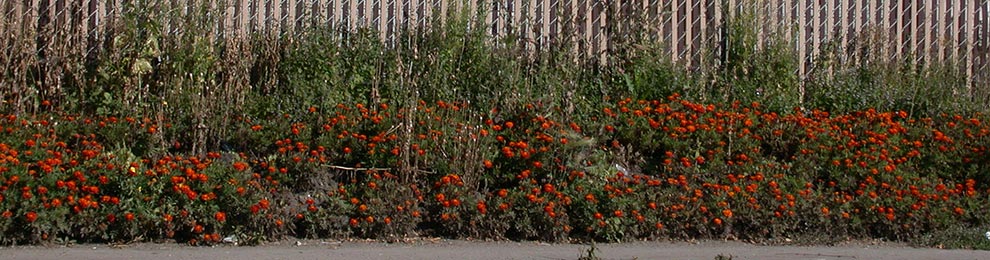
    When I tell people that I live in Boyle Street, they often look a little surprised, even concerned. Yes, some pockets are rough, but some pockets are gold. Maybe it’s because many people here have next to nothing that they make the most of the little they have, why some boulevards, tiny porches and postage-stamp front yards are jam-packed with blooms this time of year. Why people grow marigolds and red poppies right up against 107A Avenue, merry-making of the traffic and the concrete that flows past everyday.

    We are entering the season of harvests. Irish Folklorist, Máire MacNeil, in her tome, The Festival of Lughnasa, relates an old man’s account of a harvest fair held in Lehinch (pronounced la hinge) on the first Sunday in August. He recounts that the fair was full of “tricksters”: musicians, dancers, flame eaters, card sharks, gypsies, young men going from public house to public house, young women in ritual at the well of Liscannor, horse racing along “the strand” and noise everywhere.

    Think of Boyle Street like one continuous harvest festival. Indeed the whole city at this time of year. Full of tricksters and buskers and the bottle pickers on the backlanes heading for festival after festival, that all in some way celebrate the gift of the sun and the land and the growing of things.

    Publishing, too, is full of twists and turns, and my experience no different, full of last minute hitches and hiccups and near snafus. But the book is safely off to the printer at last. I hope you will help me celebrate this harvest of mine: I’ll be launching The Glorious Mysteries and Other Stories in September in Edmonton, Saskatoon, Calgary, Camrose and Lethbridge. Watch for a note with full details later in the month.

    For now, you are invited to the Edmonton launch:

    Where: Audrey’s Books, 10702 Jasper Avenue
    When: 7:00 p.m., Thursday, September 26
    What: Reading and refreshments

    Everyone is welcome. But to help with planning, please RSVP by replying to this email.

    Meanwhile, I hope you will engage in some tricks and shenanigans of your own this harvest season.

    In gratitude,

    Audrey