Author: Audrey

  • Winter Solstice 2015

    DSCN5403

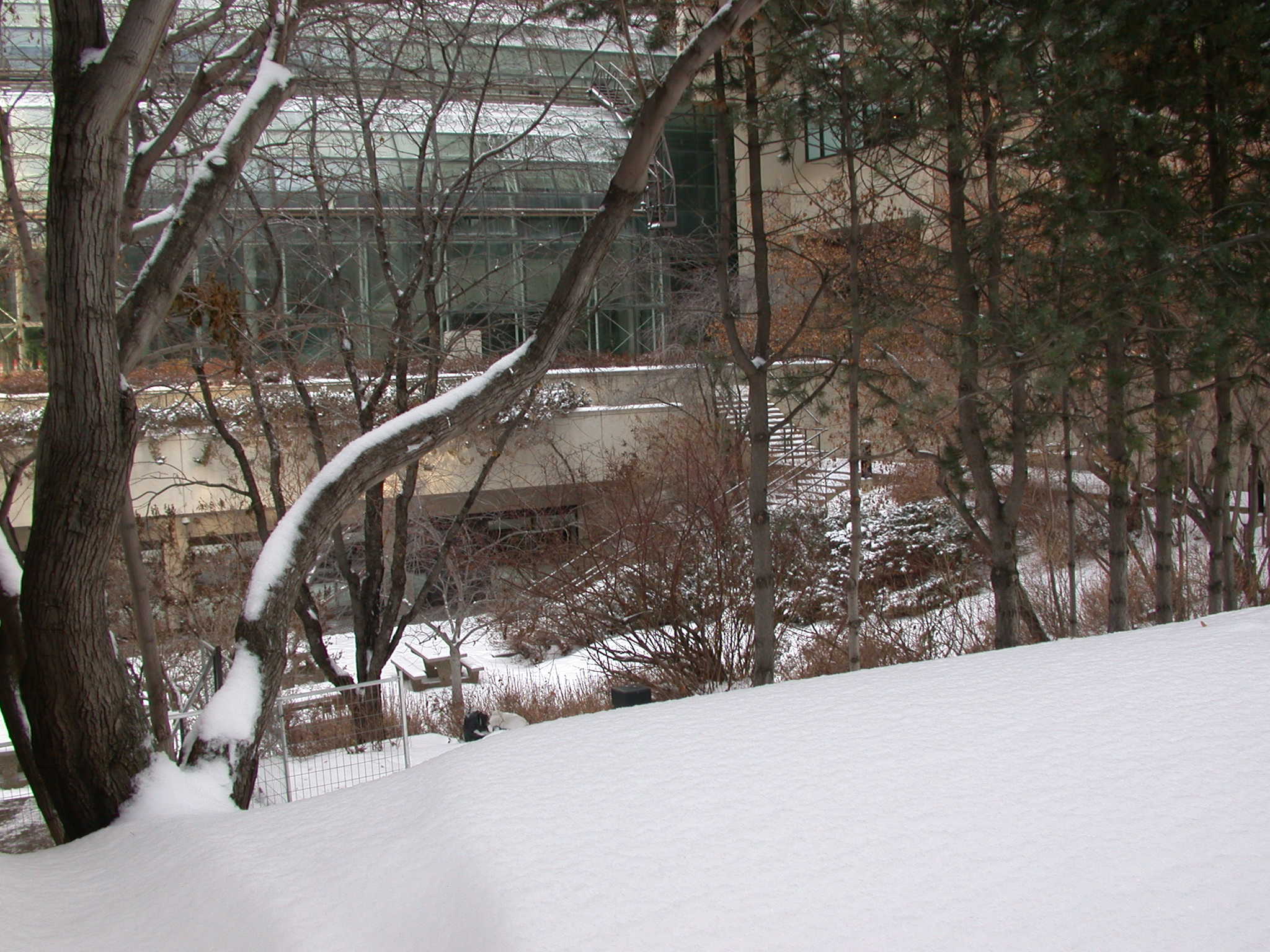
    One endearment of this season, is how it lays bare to view all that is hidden. The sunken garden I pass in the centre of Edmonton that most would never see in summer, shrouded as it is in pine, basswood, and maple, now stands open to the light. The night sky stands just as revealed. The bright stars I’ve been seeing in the dawn sky on my way to work these past weeks are not stars at all but the planets Venus, Mars, and Jupiter.

    I find the darkness of this season demands of me a certain stillness and a certain maverick joy. All that is essential is brought into sharp relief, particularly with those close to me. For example, last weekend I spent an afternoon with my 87-year-old mother learning how to make cream puffs from a 1903 recipe. And if you’ve ever made cream puffs, you’ll know what I mean. Throwing half a pound of butter into a pot of boiling water and stirring in the flour on a hot stove, I felt for a moment like we were baking in the Middle Ages over an open fire, part of a long line of mothers and daughters, held together by these simple actions and a desire to feed those we love something sweet.

    Friday night, one of my nephews came over to put together a new piece of furniture for me (a small Christmas favour, he said), and we fell to talking about his future, all the choices that a twenty-year-old must make, drawing me back to my own memories of being twenty and forward into a time that doesn’t yet exist for either of us. Those decisions tying us together, generation after generation, asking the same questions: What shall we do? Who shall we be?

    There are other mysteries, too, that I ponder. Friends and family who have suffered losses this year: poor health, marriage breakdown, or unemployment. Mysteries that require a tougher faith. Questions that I can only stop and hold like the ancients, who a thousand of years ago wondered if the sun would be reborn. Somehow, but perhaps not in ways that we can always imagine.

  • Fall Migration 2015

    When I was in Banff this August, every afternoon about three o’clock, the birds seemed to crash from the skies to feed in the woods near the studio where I was writing. About an hour later they would lift off again. Small birds most of them, some quite oddly located but that’s how it is in migration: paths cross, air currents shift. I began to look forward to their feeding, every day a different species, a single flock or a mix. They travel surprisingly well together: yellow-bellied flycatchers, grey-cheeked thrushes, least flycatchers, yellow warblers, Tennessee warblers, pine siskins, juncos, and always, cavalcades of robins. Northern species crossing and following the Rocky Mountain cordillera, south to their winter quarters.

    But migration has taken on a different cast this year. Ever since September 2nd when the story broke about the Syrian boy washed up on the shores of Turkey, and for Canadians, ever since September 3rd, when we learned that his family, father, (mother and both brothers drowned) had been trying to get to Canada and were rejected. This equinox it is not only the small animals that journey thousands of miles over rough waters, over land and through mountain passes, thirsty and hungry. According to Vox, there are nineteen million displaced people in the world today; four million from Syria alone. Their direction is north. Old and young and broken clambering into a European, and yes, a Canadian winter because the alternative is a war zone.

    We are told the world is facing the largest refugee crisis since the Second World War. I, and perhaps you, having never lived through that time, am still trying to fathom what that means. In my mind this past year, the reports of ISIL came and went, the civil war in Syria was still small and far away. The war in Afghanistan a piece of history. The wars in sub-Saharan Africa–Eritrea, Somalia–long spent. But I think we are beginning to understand again: paths cross, air currents shift. The birds remember: we were all one continent once. I walk by you every day on my way to work: neighbours from Afghanistan, Somalia once, Eritrea, and yes, Syria, I hope. We are together now; only nature knows the why of this journey.

    Let this be our meditation: look up to the skies, as we vigil, welcome, donate, and sponsor. Let this be our prayer: war no more.

  • Summer Solstice 2015

    I find myself watching the trees this year, the trees in the courtyard where I live, the trees along the streets and avenues of the City, the trees in the river valley, wild and feral, native and planted.

    One evening while cooking my supper, I take down my binoculars and look for the baby robin I can hear si-si-si-si-ing from the direction of the huge poplar fifteen feet from my patio. Finally, I spot its speckled-rust breast bobbing up and down on the green grass, still learning how to find its own supper. The stress of my hectic work day shifts.

    On my way to work one morning, I walk up to the grooved trunk of a black ash tree, stare into a smooth bore hole, where I know in past years there have been nuthatch nests. I find myself wishing for a beak to appear, wanting a chick, but see only a parent scouting up and down the bark, hunting for bugs. My mind stills.

    Out riding my bike along the river, two Sundays in a row, I keep hearing a high-pitched chorus of ki-ki-ki-ki coming from an old willow by the water. The second time, I stop my bike, find the tree, and spot two one-inch entrance holes about a foot apart, on a dead limb as thick as my arm. I wait, not long, till the father, a downy woodpecker with a red dot on the side of his head, comes to check the chicks. They keep whinnying after he leaves; I whinny inside my chest, thrilled all the way home to have been so close to their small life cries.

    I’ve been watching, too, as some elm, Manitoba maple, and ash along the City’s boulevards and in the valley have succumbed to drought this spring and failed to leaf. Some of them thick and old; some of them young.

    This is a dividing time, this few months between the melt of snow and the full heat of summer, when new leaf and new-born struggle towards the light. It’s made me want to turn off the radio some nights, forego the news, to hear the sounds of creatures beyond my windows. To steal a day without plans, and if not a day, then at least a few hours. To mount my bike or head out on foot to see what gift I might find. To eat or sleep or read or do anything by near-instinct. To seek the company of those I love. To really listen to what it is I need.

  • Spring Solstice 2015

    This time of year

    The sun rising on my walk to work. Skipping through puddles. Me slip-sliding, sometimes tripping. The streets running with water.

    The river breaking up, the swans low overhead. The souls. In a hospital room somewhere, someone is dying. Snow storm and robin song. It’s always the same metamorphosis.

    I pick my way over the remains: fast food leftovers, lost shoes, gravel caught in temporary glaciers. The horizon each evening expanding with light.

    The mirage of an ocean across a farm field melting. A family dressed for church: shiny shoes and Easter hats. The low slung Chevy carving swaths in the mud. The land not accepting this intrusion, has its own map.

  • If I were a writer in Cuba

    I often pondered this question when I was in Cuba. While there, I was able to attend the 24th International Festival of the Book in Havana, one of the largest book festivals in Latin America, founded in 1982. For ten days, the city diverts buses from their regular commuter routes to transport thousands of Haberneros to the festival site at the medieval La Cabaña fortress across the bay from central Havana. Launches are held all over Havana at cultural centres, libraries, and bookstores. (Cuba boasts more than 500 bookstores and I kept seeing them all over Havana.) Families flock to La Cabaña on weekends; school children attend readings during the day in all parts of the city as part of the curriculum. Publishers come from all over the Spanish-speaking world. After Havana, the festival goes on the road, with stops in every major city in the country. Many Cubans buy their books for the whole year at the festival.

    At this year’s festival 850 new works in social science and literature were launched, and two million copies were sold. I can attest to the people who carried armloads of books up to the till for purchase and the long lines formed throughout the festival site. For a city of 2.2 million people, that’s an astonishing number of readers. Ah, I thought my day at the festival, if I were an writer in Cuba, I would have an adoring public.

    Visual artists occupy a similar status. Havana boasts 22 galleries and at least 11 theatres. I visited several studios and workshops of painters, sketchers, and silkscreen masters. Their work seems fresh and inspired, and perhaps because of the political situation, they seem to have mastered the genre of the abstract. Theatre seems to occupy a similar status. I had the opportunity of attending a showing of Rent, the first full Broadway musical in Cuba in more than 50 years. It was a stunning show, on par and as professional a production as I’ve seen anywhere, including New York. I was reminded of a Chilean friend’s comment to me thirty years ago, when I visited his country and expressed naive surprise at the high education levels of the population, the presence of so much quality literature and music: “We are an economically underdeveloped country, not a socially underdeveloped one.”

    But there is another side to this, both practical and political. Books published in Cuba are worth about 10 to 20 pesos in moneda nacional; that’s between 50 cents and one Canadian dollar. A folklorist I met my first day in Cuba told me that a Cuban publisher had asked her to write a book on traditional folk songs, but she would be lucky to make a peso a book on the project. She declined. Her clothes, while stylish and carefully matched for colour, were torn along the seams in places, buttons missing, and were likely third or fourth hand. She works as an arts administrator in the city. I couldn’t help but think of our arts administrators too, with low pay and long hours.

    Writers and writing have been tightly controlled in Cuba. As recently as last summer, Cuban poet Rafael Alcides Perez, considered one of Latin America’s most renowned living poets, publically resigned his membership in UNEAC, the government-sanctioned writers and artists association in Cuba, because his books (published abroad) were not allowed into the country. An early member of UNEAC, in recent years he has been vocal about the country’s issues. While I was at the festival, I heard the Cuban American, Uva de Aragón, read from her novel about the experience of Cuban-American exiles in Miami. While she was allowed to attend the festival, she wasn’t allowed to sell or leave her books behind.

    Media outlets are government monitored and controlled. This becomes evident when you watch the 8 o’clock national news as I tried to most nights. While there are interesting stories from other parts of Latin America that often don’t make our newscasts in the northern hemisphere, much of what is reported on internally is news of the Party more than a debate of the issues. This pattern transfers to the internet too. Very few Cubans can afford or are allowed access to the Web. You will find cable television with CNN and internet access in many high end hotels, and you might be allowed unfettered access to the Web for research purposes if you are an academic, but the general population cannot dream of this privilege.

    Finally, La Cabaña itself, in the early days of the Revolution was the site of a notorious political prison. Most of those held here were former members of the brutal Batista regime, but not all. There were many, perhaps hundreds, of executions without trial. One might say that this was understandable, given the history and the war. But Cuba has had its own concentration camps, the Isle of Pines, for example, where stories of prisoner abuse were on par with those of Russian gulags. With 57,000 inmates (by 2012 numbers), Cuba has one of the highest prison populations in the world. There are those in for the standard crimes: drugs, murder, theft. There are those who are arrested for having no job and keeping bad company, what the system calls “pre-criminal dangerousness.” Finally there is a third category, political prisoners, less than in previous years now that they can choose exile, but according to Human Rights Watch, at least “dozens.” Dissidents, bloggers and journalists among them, are still harassed, either through public shaming, the termination of employment or arbitrary arrests without trial. I encountered a small hint of this while I was in Cuba. My folklorist friend told me in a lowered voice that she was invited to join and even publish with a group of dissident writers in the city, but where would that leave her? she asked, hinting there would be consequences she and her family could not afford. I wondered what I would do in similar circumstances.

    It was these whispered conversations, though, the fact that they are taking place at all, that gave me hope for change. While in Cuba, I often found my travel to a destination and not the destination itself the most revealing. I had conversations with other writers, teachers, painters, musicians, taxi drivers, people I met on the bus and in the street along the way, that gave me the sense that Cubans on every side of the debate about US-Cuban relations are holding their breath, wanting to believe but waiting to see if their future will be different.

    I left with the sense that this moment in Cuba is a beautiful and fragile one, that social development has continued in spite of political repression, and its urgency made only more acute by being drawn against the canvas of a vibrant cultural life. Oh, that artists could play as important a role in the social fabric of my own country!

    As I shouted out !Bravo! with the rest of the audience the night I saw Rent, I want to shout out !Bravo! to all who write, paint, act, sing and speak. Sigue marchando adelante. Continue marching forward.
  • The doors of La Habana Vieja

    DSCN5322

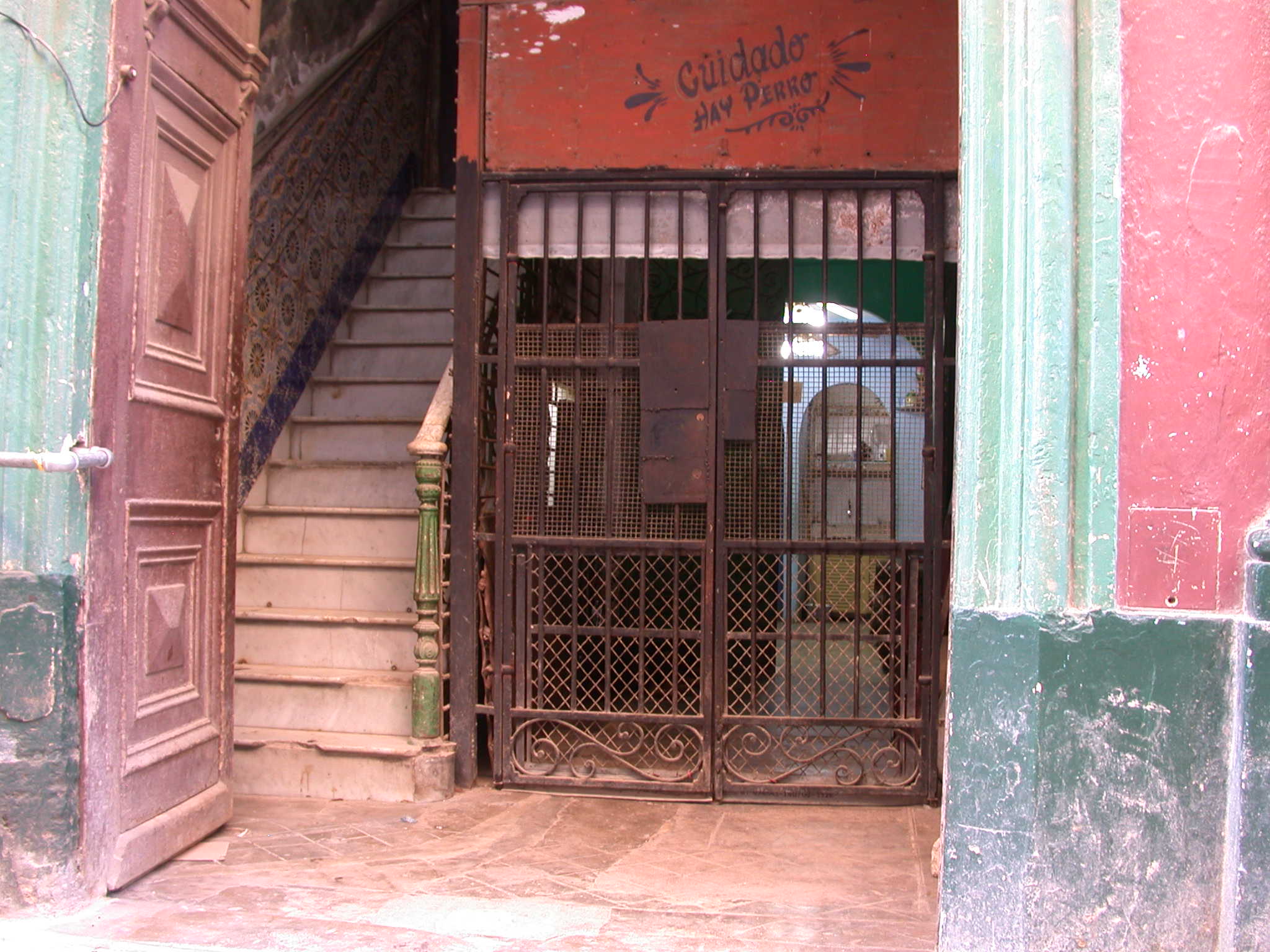
    I’ve just returned from two weeks in Cuba. What struck me first were the doors. Most are from the colonial period. Huge, double doors, sometimes wide, sometimes narrow, often about 15-feet high. Solid magohany. Sometimes they haven’t been painted in a long, long time. Sometimes the aprons of the walls out front or inside (like those along the staircase in this photo) are covered with the remains of Moorish tiles, the floors in simple but prized Cuban limestone. The front step, a cut paving stone or nothing but the narrow sidewalk, where come evening, no matter how small the space, grandparents, parents or friends will sit and children will play in the street.

    Sometimes there’s a business tucked inside: a confectionery, a barbershop, a shoemaker bent over an old black and gold Singer industrial sewing machine, a small produce market with plantains, mangos, guayabas, tomatoes, onions, and cucumbers on offer. A private telephone service with chairs lined up ready for the queue, a motorbike repair shop, a car park. Sometimes there are workers making and pouring cement, a restoration underway. Sometimes the front door opens immediately into the family kitchen or sitting area, the stove in use or the sofa in view. Clotheslines full of sheets, the family laundry in all its colour taking in the breeze from the sea.

    A tall front, desk where colonial servants would have received guests, now supports residents waiting for rides, passing the time of day. Often one can glimpse into the courtyards beyond, the fruit and flowering trees, probably a couple hundred years old, and in the shade, women having coffee with their neighbours, families relaxing in the evening. It is not uncommon to find stained-glass windows overlooking these inner gardens, in the style of tropical art nouveau.

    Other times one looks into a cavern, empty, yet full of possibility. A grand cast iron staircase winds up towards a second, third, fourth and even fifth floor. Or, like these in the photo, a straight staircase of Italian marble, worn but serviceable still.

    “What did you think of Cuba,” my host asked me on my last night in La Habana. “Fue impresionante,” I said, by this time having found the right word to express the weightiest of experiences in Cuban Spanish. Impressive. And this is what I meant: the open door, the space for invention, the re-purposing of the old with the new. Most of all, a country and a people that has done so much with so little and against great odds.

    No, Cuba is not a utopia. It has its share of problems. But it also has this: many, many lovely city parks; ambitious reforestation and eco-restoration projects, now world heritage sites; an original music born of contrast that is celebrated everywhere; an innovative health care system; a population of avid readers; and an amazing dearth of homelessness. Oh, I could go on, but for now, Cuba, !Le saludo! I salute you!

    And, oh yes, the sign over the grill says, Careful, there’s a dog, with a flair in the calligraphy, that almost puts a smile on Beware of the dog. So Cuban.

  • Brighid’s Wheel: The Perpetual Fire

    This past Wednesday I saw my doctor for my annual physical. Last year at this time my blood pressure was 80/60. I had been feeling the fatigue for months and would for many more. This January my blood pressure was back to 104/72, normal for me. I had always had low blood pressure, but never so low. Was it the long hours involved in publishing my second book? Was it stress at work? Was it diet?

    I tried salt. I limited my intake of carbohydrates. I initiated a 360-degree feedback process for self-awareness. A few months ago my energy started to shift; this past week I was even up early some mornings at my desk writing again. Friday I walked to work with the light beginning to break on the horizon. The first time in months. And I remembered that we are at the Celtic spring, the feast of Imbolc and the return of the light.

    I am put in mind of the perpetual fire at Kildare, Church of the Oak, a sanctuary pre-Christian in its origins, tended by a group of nineteen holy women, each taking a turn holding vigil over the fire for one day, then on the twentieth day leaving it for Brighid to tend herself. Though the fire consumed fuel, it was said to leave no ash.

    There were vestal virgins in Greek and Roman times as well. But historic chroniclers tells us that the fire at Kildare was still burning in the twelfth century and probably not extinguished completely until the British suppression of the monasteries in Ireland, during the sixteenth century. The fire was re-lit in Kildare in 1993, where it is tended once again by a group of women dedicated to Brighid.

    The number nineteen is significant astronomically. Babylonian, Hebrew and ancient Chinese calendars were based on a nineteen-year cycle worked out by astronomers to synchronize the number of times the moon orbits around the earth and the earth around the sun. Nineteen is also a common eclipse cycle for the sun and moon. Some standing stone circles in the Western Isles of Scotland were built with a nineteen-year cycle in mind; at Torhouse the circle is comprised of nineteen standing stones.

    Brighid’s wheel is a sun symbol and Brighid herself was a sun Goddess before she became a Christian saint. The women at Kildare were feeding the fire but more than the sun’s fire, they were feeding their souls, keeping vigil over the light within. The perpetual fire is the human spirit, the light that is never extinguished, even though we may see no evidence for its existence for long stretches, only ruins where it once shone. Sometimes it moulders unseen in our hearts, sometimes there are only coals, sometimes only memories.

    William Blake wrote:

    The Human Dress, is forged Iron
    The Human Form, a fiery Forge.
    The Human Face, a Furnace seal’d
    The Human Heart, its hungry Gorge.

    And sometimes others tend the fire for us.


  • The Winter Garden 2014

    Recently I read the first volume in a series of books by the Norwegian author, Karl Ove Knausgaard, called My Struggle. It’s about the struggle of an ordinary man, and though we don’t often speak this way to one another, the book reads like the struggle of everyman/everywoman to come to terms with human suffering. About a half million Norwegians have read the book in the original language and millions of people worldwide have read it translated. Some are calling it a 21st century version of Proust. And perhaps it is; I’ve never read Proust. My Struggle is a candid, unflinching examination of self. A Confessions, but for this, a secular age. Twelve Step programs such as AA call this kind of exercise a searching and fearless moral inventory, a story of the deepest motives of self, and I don’t think it’s a coincidence that a father and a son’s battle with alcohol figures large in the text.

    There is a garden in the centre of  Edmonton that I discovered quite by accident a couple of years ago: you cannot see it from the street. Surrounded by the modernist, almost Stalinist lines of the Alberta Law Courts lives a sunken garden full of trees, some of them unusual in the area, some of them not: American basswood, pin cherry, Amur maple, pine, lilac, Schuberts chokecherry; the groundcover comparatively simple: Virginia creeper, gooseberry, cinquefoil, and hosta. I’ve been making a habit the last few months of detouring by it on my walk to work, calling it my Winter Garden, after the robin, the magpie, and the American goldfinch I found there one day in late summer, when I sat and watched their rustling on the slopes for worms, for bugs, and for seeds.

    And isn’t this how life sometimes meets us? The harshness and light living side by side? I have been learning this past year how to lean in to my own struggle more, however small it is in the world of things, however fleeting: my feelings of inadequacy, small and large disappointments, and losses. I said to a friend recently, I am learning to befriend my anger. I pause a few times a day to consciously feel. Not to do anything about these sensations but to acknowledge and accept them. I find it easier to do this in the presence of nature—oceans or simple gardens. I remember my connection there to living things, my own breath, and my imagination. Most of all, when I let go, I find I am held by a circle of living things, and the generosity of this, especially at this time of year, always overwhelms me. The world is not too large for us.


  • Fall Equinox 2014: Gathering the Harvest

    The harvest doesn’t always come in on time or the way we have planned it. The crop may not be a bumper or the prices may be down. The grain heads may have dried out early with the heat or were hailed out or eaten by grasshoppers. Some years, the harvest may not come in at all.

    People from Saskatchewan are famous for calling their land Next Year Country. You could say it’s the farmers’ motto. There’s a farm near Craik, halfway between Saskatoon and Regina, that has for decades, had this written across the roof of the barn: Riskan Hope. I was in Saskatchewan this summer on a writing retreat and, of course, saw the sign again from the side of the highway.

    Lately, I’ve been thinking about my writing in harvest images. But it might be a hundred things: goals, aspirations, ambitions dreamed of. This fall, I had the chance of some further feedback on a project I’ve been working on since 2010. I thought it might be ready for publishers, but learned, no, not yet.

    After the initial let down, what started to come to me were images of walking alongside a combine. Growing up on a farm, one of the chores was to take lunch or supper out to the field for the combiners. It might be my dad or one of my brothers harvesting. But even without a reason, I used to love to spend part of an autumn evening, moon and mists rising, in among the swaths, the fields golden with fall. Circle back to present time, and in my mind’s eye, I am walking alongside a combine and throwing not oats or barley but ideas into the hopper, knowing that they are collecting and moving me and my story towards completion. In these images of myself alongside the combine, I see chaff flying out the back of the machine, and I keep walking. Somehow I know that it’s as I move forward that I will gain insights and that continuing to move is part of the secret.

    Without risk we cannot hope and without hope we cannot risk. Without riskan hope, there is no harvest.

    Blessed Be.

  • Being. Sick.

    There is a giant chalkboard in our neighbourhood at the corner of 95 Street and 103A Avenue, right over a community garden that stands on what once was the House of Refuge Mission, which burned down about a year ago in a series of fires. The place used to minister to the homeless and still does. At the top of the chalkboard are the words, Before I Die. And under them, looking over the sunflowers in that place, the people of Boyle Street have written and rewritten what they want: To see the Chicago Bears play. To punch the lights out of $*#%@#! [name withheld]. To be myself. To live! are just a few of the sentiments I’ve witnessed there on my comings and goings in and out of the neighbourhood all summer long.

    I came down with a violent chest cold on Sunday and have had to spend the last two days at home, in bed, not really being able to stir until now.  I haven’t been this sick in years. It’s surreal, not following my routine as usual, not getting up, going out, going to work. Being still. Like stepping away from my world/the world for a moment and living without expectation. Being. Sick. And living with questions, I’m not sure I know the answers to.

    Illness puts me in mind of all my frailties: physical, emotional, spiritual or otherwise. Life is full of small and large disappointments, setbacks, and discouragements. Challenges that leave us wondering: Can I do this? Can I overcome this? Is this really what I want to be doing with my life?

    As I get myself ready to go back to the “real” world of work tomorrow, it seems to me that we all need a chalkboard beacon somewhere in our lives–silly, honest and wise–calling us back to the vision of what we’re meant to be here. I know I do.

  • Dog Days

    The Romans called this time, the Dog Days of Summer, beginning July 24th and ending August 24th. Dog, after Sirius, the brightest star in the night sky, which in ancient times would rise, like Venus, with the morning sun.  A season of super moons and harvest moons, languid days of heat and restless nights.

    Being a foodie of sorts, it is my favourite time of year for eating. And friends and family will tell you that I do like to eat. I inherit it through the Whitson side: all those smorgasbords our father took us to as kids.

    In Edmonton, Alberta, for a few days every year, produce in the markets is fresh and local: from lettuce to carrots, chard to corn, radishes to beets. I load up every Saturday morning. The stores are full of sweet BC fruits: peaches, nectarines, cherries, sugar plums. I grab as many as I can carry; stuff them into my fridge; spin them into smoothies; eat them in other people’s pies and crumbles. Eat them straight. Stuff myself.

    Dog Days. This is the season to gather honey. I go out more, I see friends more, I walk and walk and cycle. I don’t mind driving long distances. The horizon is open and whatever happens to me, it won’t be a snow storm or a snow bank I’ll be stuck in. I find I have days of complete relaxation. Maybe it’s because of vacation taken, maybe it’s a coinciding of vacation time in our collective unconscious. Everything slows.

    The other weekend, I called a friend up for a walk through the river valley. It was spur of the moment,  a perfect morning, and so good to have a wide open day with no plans written across it. “A joy” I said, to go off rambling with a friend and have no commitments pressing.

    “Golden,” she said, a little “like retirement.”

    A little like summer, I say.

    Golden.


  • Letter from Sage Hill

    Well, from the Sage Hill Writing Experience actually. As Philip Adams, the Executive Director, likes to joke, the name sounds like something cooked up by a bunch of hippies sitting around a circle smoking their favourite leaf. And may have been, but it is an experience. First there’s the people: the writers who come here from all over Canada for ten days to learn, to teach, and to read from work in progress. A meeting of the tribes, and some of the best writers in the business. Then there’s the landscape: the painterly Qu’appelle Valley near Lumsden in Southern Saskatchewan, the way the colours of the prairie hills change with the time of day and with the light, the way the barn swallows dive and dance the thunderstorms, the early and late airs. So many birds: meadowlarks, blackbirds, robins, catbirds, kingbirds, Baltimore orioles, so many singing sparrows. There’s the physical building itself, an interchurch retreat centre with a Franciscan legacy. The round chapel in the centre that’s a cool refuge from the heat of the day. The Franciscan Friars who do the dishes morning, noon and night. The bedrooms so narrow that one has to go outside to turn around. And I must mention the food, which reminds me in a good way of the best of farm kitchen cooking from my own childhood, especially the desserts, only Saskatchewan is a different country.  Nowhere else have I eaten exotic Half-Hour Cake or Pudding Cake or seen Matrimonial Cake (called Date Squares in Alberta) served with a spoon, and rice pudding baked in an oven. And yes, the coconut creme pie (think truck stop) is to die for.

    Now i’ll wait for the Saskatchewan ex-pats to correct me.

  • The Longest Day: 2014

    Last weekend I took myself into the river valley, though I thought I had a thousand things to do: duties, commitments, chores. No, into the river valley I went on my trusty bike, down the wooden staircase at the end of 92 Street, down into my soul, a forgotten part of the city, past someone’s spilled garbage, past dead spikes of trees.

    Down to Dawson Park I went, carrying my bicycle when it couldn’t carry me. Perhaps I was inspired by the children I’d seen in my neighbourhood lately of mornings, clustered around their mothers, waiting for a bus, waiting for a ride. Jumping like feeding birds at the bells and flashes on the light rail crossings. Pointing, waving to all who will hear (let those who have ears), to anyone on board the passing LRT train. Thrilled to be.

    It’s the trip down the staircase I remember. Here’s what I found: someone’s garden caragana spilling into the valley. Someone’s garden sowing lilac, rhubarb. Fireweed. Someone’s damp blanket, tin cans, old sweaters. Yellow warblers playing treetops, then hide and seek, pitching their sweet-sweet-shweeeeeet call from dead poplars to green willows, all to one purpose: bugs, bugs, bugs.  Robins merry-merrying, clay-coloured sparrows buzzing, crickets in the shady patches humming. And here’s what I thought: “It’s funny how the place with richest life in the valley is the most neglected.” And … “All of this is what soil is made of.”

    So it is with my own life this solstice: some of it groomed, some of it feral and wild, some of it dead and rotting. I may wonder, and you too, what can be fed here in the chaos. We may hesitate to celebrate the now, always looking for that ideal state of balance, that somewhere else, other than here. It’s not perfection in the literal sense, waiting till I get this or that together, figured out, mastered. Solstice just comes, demands to be celebrated.

    Go greet the wild rose.


  • When the Rain Stops Falling

    Last weekend I went to see When the Rain Stops Falling, a play by an Australian, Andrew Bovell. It was mounted by the U of A Studio Theatre, whose productions I have always found daring and top-notch.

    One of the opening scenes sent a shiver through me.  The year is 2039. It’s the middle of a storm, by the sea, and a man walks alone. A fish comes flying out of the sky. The man doesn’t know where it has come from, whether an answer to prayer or a freak of nature. He is pondering what to feed a son whom he’s never met, who is coming for lunch. Fish are nearly extinct, only the rich in the most exclusive  restaurants can afford them.

    This play is about our logical future: the rain that will not stop; the fish that are extinct. This is where we are heading. I know that. But has anyone said it out loud in such an intimate way to me before? The many ways our connection to living things has been lost?

    Ironically, or perhaps purposefully, this play is also about our lack of intimacy with each other: how a secret can distort a family through four generations, and the shame lived in silence.  They are in every family tree: the things that keep us apart, the cost of that isolation. The need to know, the search that unfolds, the questions. The memories, no matter how partial, that can guide us if we acknowledge them.

    By the end, when it does stop raining, there’s only the glimmer of a lost memory, of connection, enough though to hope. And the proof, more than a week later, is that I’m still thinking about When the Rain Stops Falling. 


  • Middlemarch

    I spent my lunch hour today listening to a podcast panel discussion on George Elliot’s masterpiece, Middlemarch, first published in 1871. The panel of Elliot scholars, all women, were interviewed by Eleanor Wachtel on CBC Radio months back.

    I can identify with the young women in Middlemarch who hold a fierce idealism about marriage and family and with those who want to find a greater purpose in their lives. I can also identify with the same women having to come to terms with a less-than-perfect world, relationships that are not textbook, and lives that have been touched by grief. Perhaps what I appreciate most about George Elliot’s rendering of the reality of women’s lives is her compassionate gaze on all the characters, men and women, even those whom I don’t like.

    Give it a listen, even if you haven’t read the book and don’t plan to. What the book and the panel have to say about women and marriage and writing is still timely.


  • May Day

    On my walk to work, I always pass the Mother Teresa School in Boyle Street. Yesterday morning, before eight, I noticed children out on the swings, slides, and monkey bars swooping and diving like a flock of small birds just back from wherever they go in winter. It was warm enough. And this morning the catkins on all the trees looked ready to pop and fly with them. Signs of spring, I thought.

    Happy May Day!

  • Beckett: the Egg and the Stranger

    A few years ago,  when I was going through a difficult patch in my  life, during a shoulder season like now, not-winter, not-summer, I was hailed one evening by a voice from behind a small drift, with a shopping cart parked in front. It was close to the end of November, but above zero that day and calm. An Aboriginal man was lying behind a ridge of snow and against a hedge, trying to stay warm. 

    I had come home from somewhere that night, lost in contemplation, no doubt of my own troubles, and hadn’t even noticed the cart. I lived in Oliver then, and there are always carts and bottle pickers going through. Sometimes they would stash the cart for the night and come back for it the next day.

    The man seemed like a character out of a Beckett play, you know, the kind that pop in and out of garbage cans and say the most absurd yet spellbinding things: “Hey! Come here for a minute,” he called over to me. I’m not sure I would have gone over to him if he had been standing up, but there was something about him on the ground, that was completely disarming. He was leaning on one elbow, stretched out in his parka and jeans, looking up at me as if it were the most natural thing in the world. “I’m just resting here for a few minutes,” he explained, “before heading to the bottle depot” nearby, to cash in his empties. “Then I want to get to the detox. Someone told me it’s around here.” He was perfectly coherent. 

    “Yes, I said, you’re really close.” 

    “I want to sober up for my granddaughter’s Christmas concert,” he went on.

    “The detox is due east if you follow 103 Avenue to 107 Street,” I told him, pointing, the old social worker in me eager to help.  

    He was cheered to find that he was so close. Then he asked if he could have something to eat before he left. “I just need a little energy,” he said. So I ran into my apartment.  I was low on groceries: the bread I had was frozen, but I did have a boiled egg. So I grabbed it out of the fridge and brought it out to him.

    His eyes lit up, disbelieving. “Is it cooked?” he asked. “Yes, yes!” I have never been so excited to share a piece of food with a stranger. He was so grateful, he grabbed my hand and kept saying “Merry Christmas! Merry Christmas!” 

    “Merry Christmas!” I said back. “Merry Christmas!” But I could just as well have said “Happy Easter! Happy Easter!”

    Five minutes later I looked out the front door of the building. He was gone, his cart too. I don’t know if he ever found the detox or sobered up or attended his granddaughter’s Christmas concert. But I felt like I’d been visited by an angel. Which is all to say that the egg and the stranger and the enduring possibility of spring is what makes Easter for me. I still think about him.


  • Truth and Reconciliation

    I spent part of my weekend at the Edmonton National Event for the Truth and Reconciliation Commission. I had heard about the commission but was skeptical about its purpose before I went. After an hour in a sharing circle, I realized I was witnessing a powerful historical event. First, second, and third generation survivors: Cree, Blood, Sisika, Nakoda, Shoshonee, Salish, Dene, Inuit and Metis, from all corners of Western Canada, all together in one room speaking their common truth, courageously, in front of strangers and cameras, all of it recorded. There were thousands of people in attendance, many of them non-Aboriginal.

    The Edmonton event was dedicated to the sacred teaching of wisdom, knowledge learned through experience. As one of the survivors put it, “you’ve heard about the residential schools, you’ve heard about the abuse, but it really hits home when you hear the stories of real people affected by the experience.” That’s how I felt after the first hour: I was starting to get it.

    At residential schools, the children were called savage, stupid, and dirty and they were tortured. One man spoke about being dressed in a skirt as a child and stood on a stool in the corner because he had lost his handkerchief. After class the nun sent him with one of the brothers to look for his handkerchief in the outhouse; the brother threw him in the pit and he had to crawl through the excrement. There was no handkerchief. Another spoke of the children having to scrub their skin with floor brushes until their elbows and knees bled. If the food was rancid, they had to eat it. If they threw up, they were sometimes made to eat their own vomit. Younger children were sexually abused by teachers, by nuns, by priests, even by older children in the school, themselves victims of abuse. One man spoke about returning to his community where he was re-victimized by other survivors. Many spoke of their abuse of alcohol and drugs to numb the pain of the trauma they had experienced.

    One survivor said, when he got out of school, it was natural that he would end up at the Edmonton Institution. A friend told him, “It’s better than residential school. They let you speak your own language and they give you tobacco.” In the circles this weekend, some came who had just been released from prison; others came who are leaders, teachers, nurses, lawyers, country singers, and hockey players, several with their families nearby. They all wept; we wept with them. Many came seeking forgiveness for violence they had committed against their children, against their spouses, against the community. Those of us who listened sought forgiveness too. Some spoke of suicide attempts. Many spoke about the healing they had received in their grandchildren. Many also spoke about their recovery from drugs and alcohol.

    It hit me that many of these victims of trauma have been isolated not only from society at large, but in their own communities, isolated by the weight of shame. Many spoke of feeling an enormous load lifted off of them once they had told their story.

    Perhaps the most moving acts I witnessed all weekend were the offerings of tears. At the end of each session, at every door, organizers collected the wet Kleenexes of all of those who spoke and all who had listened. Afterwards, they were burned together in the sacred fire.

    Marci cho. Hay-hay. Thank you.

  • Spring Equinox Eve 2014

    Pysanky

    I am neither Persian nor Ukranian but I am curious, and I have found that curiosity is one of the best passports you can have for travelling into another culture or, indeed, another world. Years ago a friend gave me three pysanky, Ukranian Easter eggs. The practice is called pysanky or writing because the symbols are a language, one that pre-exists Christianity, and the practice of decorating them called writing. The instrument used is a stylus; the materials: fire, beeswax and vegetable dyes. Pysanky are only made for Easter and in pre-Christian times, for Spring.

    Ukranians aren’t the only ones who write eggs at this time of year. People all over Eastern Europe have variations on this tradition. An Ismaili Muslim friend told me last week that her community too will be painting eggs this weekend in honour of Nowruz, the Persian New Year, marked at the Spring Equinox. Some say that the two traditions have a common origin in the Zoroastrian sun cult 2500 years ago. But like the pysanky itself, the layering is a multitude.

    Both traditions rely on fertility; the egg, a near universal symbol of rebirth. Eggs are set out on home altars and given as gifts. The designs for both are abstract, geometric, many of them survivals from Paleolithic and Neolithic times. One of the most popular is the eight-pointed star for the everlasting sun, in the pysanky sometimes shown with fir branches radiating from the centre. Other motifs are waves for water, triangles etched like a sieve or net (a mark of prehistoric Goddess worship), rounding bands to represent eternity, meanders and spirals for protection against evil, plowed fields and soil marked out with diamonds, and seeds shown by dots.

    Though they are a work of art, what I like most about these honourings of the egg, is what they can teach us about how to live. I treasure what one commentator had to say about the tradition of writing pysanky: one had to come to the task at peace, at the end of the day; the day holy… lived without argument, accusation or sin. Writing pysanky is really a form of moving meditation, the way that walking is to sitting meditation. My friend who wrote pysanky told me each egg would take hours. When one moves the hand in a creative way, one immerses oneself, sinking into a world beyond, an older world. For her it was a form of prayer. I think this is true of all creativity, whether it is cooking supper or writing a piece of music or passing through a major change in life. It forces us to leave ourselves and recreate ourselves at the same time.

    Much peace to you this holy changing night.

  • Stay Attached to the Tree

    I met Iftikhar in one of my project management courses last year. He’s a policy “wonk,” with an honours degree from York University and a Master’s degree in Peace and Conflict Studies from a prestigious institute in Sweden. He speaks fluent, even eloquent English, Urdu, Arabic, among other languages, and like so many new Canadians, cannot find work in his field. Iftikhar (IftiJar) whose name I can pronounce correctly, only because the kh makes the same sound as the Spanish jota, which is also from the Arabic, has family roots in India that reach back to the days of the Silk Road. He has been trying for some time to get on with the Government of Alberta.

    I asked him recently if there is a saying in his culture about perseverance. Yes, he told me, in Urdu, Paywasta reh shajr say ummed-e-bahar rakh. Which roughly translates to, Stay attached to the tree and hope, for spring is in sight. I almost clapped my hands reading this in the midst of minus 30 degree weather last week. The exhortation is directed, he explained, to the leaves themselves as they prepare to face the winter season. The image works for me too, to stay attached to what is in my elemental nature, no matter how fragile. When I lose my direction, to remember to cling to the tree of my being, with its roots, its heart wood and its living core. For spring is in sight.